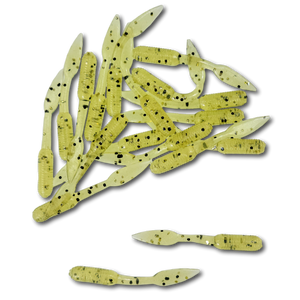
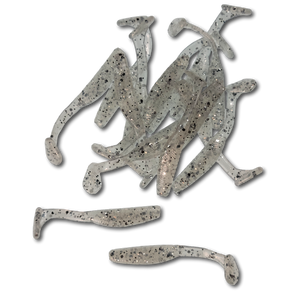
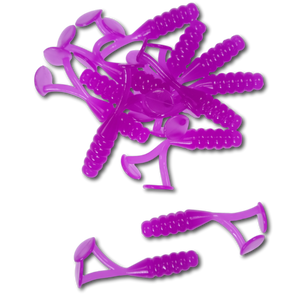
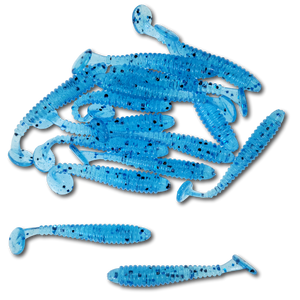
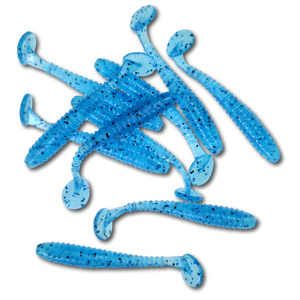
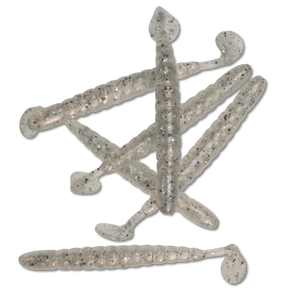
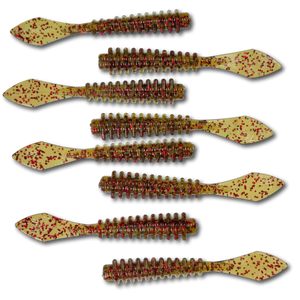
Paddle tails
Paddle-tail swimbaits are designed to move water and telegraph life. A boot-style tail creates a consistent thump that fish can feel as much as see, making paddle tails one of the most reliable profiles for covering water and triggering reaction bites.Best forBass, walleye, pike, and other predators.Core ideaConsistent vibration and forward movement.Where it shinesOpen water, edges, flats, and as a trailer.Confidence moveLet the tail work — steady retrieves catch fish.
Paddle-tail rule: Speed controls action — not rod movement.
Field guide: paddle tails
Thump. Track. Trigger.▾ Click to open
Field guide: paddle tails
Thump. Track. Trigger.
Why paddle tails get bit
They advertise themselves.
- The boot tail displaces water and creates vibration.
- Fish locate them easily in stained or windy conditions.
- Effective for reaction strikes and feeding fish.
Best rigs
Match depth and cover.
- Jig head: open water and structure edges.
- Swim jig trailer: adds vibration without bulk.
- Bladed jig trailer: enhances thump and stability.
- Weighted swimbait hook: weedless shallow cover.
Retrieve & cadence
Keep it simple.
- Slow roll: steady retrieve near bottom.
- Mid-column swim: constant speed over cover.
- Kill & go: brief pauses trigger followers.
Tail size & body style
Fine-tuning action.
- Bigger tail: more lift and vibration.
- Smaller tail: subtle action in clear water.
- Rule: downsize tail before downsizing bait.
Color & water clarity
Visibility matters.
- Clear water: natural baitfish colors.
- Stained: brighter or high-contrast tones.
- Rule: vibration draws attention, color seals the deal.
Paddle tail FAQ
Common adjustments.
- Not tracking straight? Re-rig and check alignment.
- Too much lift? Increase weight or trim tail.
- No bites? Change speed before changing bait.