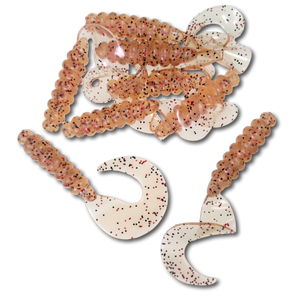
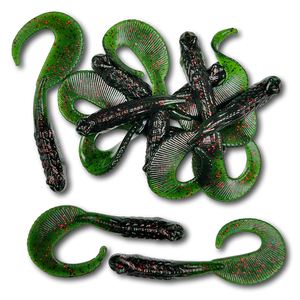
Grubs
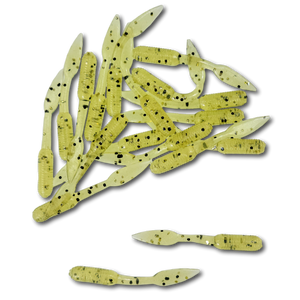
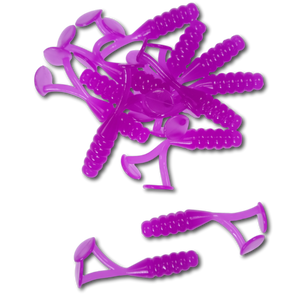
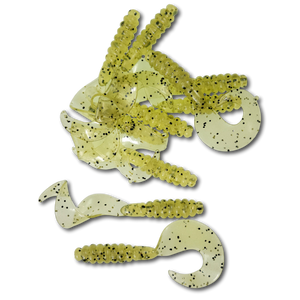
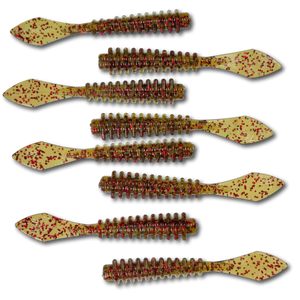
Grubs are one of the simplest — and most effective — soft-plastic profiles ever made. A small body paired with a swimming tail creates consistent action at almost any speed, making grubs deadly across species and seasons.Best forBass, crappie, panfish, walleye, and trout.Core ideaContinuous tail action with minimal effort.Where it shinesOpen water, edges, current seams, and as a trailer.Confidence moveIf nothing else works, tie on a grub.
Grub truth: A steady tail beats fancy action when fish want consistency.
Field guide: grubs
Simplicity. Motion. Reliability.▾ Click to open
Field guide: grubs
Simplicity. Motion. Reliability.
Why grubs still work
They do one thing extremely well.
- The tail moves with minimal forward speed.
- Fish recognize the action instantly.
- Works when fish are neutral or active.
Best rigs
Versatility is the advantage.
- Jig head: swim, pendulum, or hop.
- Swim jig trailer: adds tail kick without bulk.
- Spinnerbait trailer: classic thump.
- Ice jig: subtle movement under the ice.
Cadence that catches
Let the tail do the work.
- Slow swim: steady retrieve just above bottom.
- Pendulum: cast shallow to deep and let it swing.
- Lift–drop: subtle hops with tail movement on fall.
Single vs. double tail
Choosing the right style.
- Single-tail: cleaner, more subtle action.
- Double-tail: more vibration and lift.
- Rule: single for pressure, double for dirtier water.
Color & size
Simple rules.
- Clear water: natural or translucent.
- Stained: solid or brighter colors.
- Rule: downsize before changing colors.
Grub FAQ
Dialing it in.
- No bites? Slow the retrieve.
- Too much lift? Shorten the tail or increase head weight.
- Short strikes? Downsize the grub.