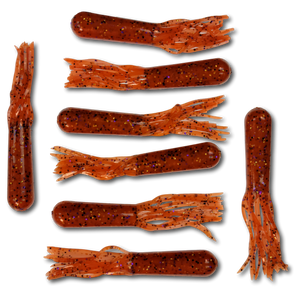
Tubes
Tubes blend two forage signals into one bait: a solid body that mimics a baitfish or goby, and a skirt that breathes like claws or fins. This combination makes tubes a go-to profile for bottom contact, gliding falls, and pressured fish.Best forSmallmouth, bass, walleye, panfish.Core ideaCompact body with a living skirt.Where it shinesRock, sand, docks, current seams.Confidence movePause on the fall — that’s the bite window.
Tube rule: Most of the action happens while it’s falling or barely moving.
Field guide: tubes
Fall. Glide. Breathe.▾ Click to open
Field guide: tubes
Fall. Glide. Breathe.
Why tubes still work
They look alive without speed.
- The skirt pulses on slack line.
- Fish interpret the profile as multiple forage types.
- Excellent for pressured or neutral fish.
Best rigs
Inside vs. outside matters.
- Internal tube head: clean profile, snag resistant.
- Ball head jig: faster fall, more bottom contact.
- Drop shot: suspend and let the skirt breathe.
- Ice jig: subtle flare under the ice.
Retrieve & cadence
Slow wins.
- Drag: keep it crawling on bottom.
- Hop–pause: short hops with long falls.
- Glide: let current or slack line do the work.
Tube sizes & profiles
Match the situation.
- Micro tubes: panfish and finesse bites.
- Standard: bass and smallmouth staples.
- Rule: size down before switching profiles.
Color & water clarity
Natural first.
- Clear water: goby, smoke, green pumpkin.
- Stained: darker solids or subtle contrast.
- Rule: skirt movement matters more than flash.
Tube FAQ
Common fixes.
- No bites? Slow down and extend pauses.
- Snagging? Switch to an internal head.
- Short strikes? Downsize the tube.