Jig Heads
Jiggin Johnson’s jig heads are built to match the way each bait is actually fished — weedless wacky rigs for skipping and shallow cover, skirted tube heads for compact tubes, tapered tube heads for bigger tube presentations, and ice jigs for vertical cold-water bites. Pick the head based on the bait profile, hook size, cover, and fall rate you want.Best forMatching soft plastics to the right hook, fall angle, and cover situation.Core ideaThe right jig head makes the bait fish cleaner, fall better, and hook up more consistently.Where it shinesDocks, weeds, tubes, finesse bass setups, crappie/panfish water, and ice fishing.Confidence moveWhen bites get light, slow the fall and let the bait stay in the strike zone longer.
Quick pick: Match the head to the bait first, then fine-tune weight by depth, wind, cover, and how fast the fish want the bait falling.
Field guide: Jig Heads
Hook match. Fall rate. Cover control.▾ Click to open
Field guide: Jig Heads
Hook match. Fall rate. Cover control.
Choosing the right jig head
Start with the bait and hook size, then adjust weight for the situation.
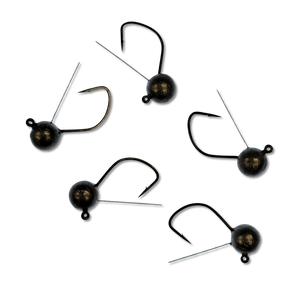
- Wacky plastics: use the weedless weighted wacky jig when you want a controlled sink and fewer hangups.
- Small skirted tubes: pair with the skirted tube jig when you want the bait to stay compact and natural.
- Larger tubes: use the tapered tube jig with the 4/0 Victory hook when you need a bigger hook gap and stronger tube profile.
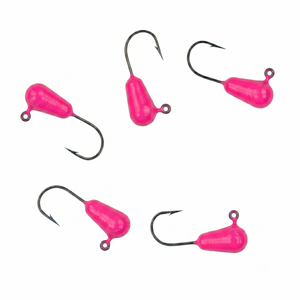
- Vertical cold-water fishing: use ice jigs when the presentation is more about hover, flash, and precision depth control.
Weedless wacky jig
For bass around docks, grass, laydowns, and shallow cover.
- Best use: weighted wacky rigging when you want a faster, more controlled fall than an unweighted worm.
- Where to throw it: dock edges, weed pockets, shade lines, laydowns, sparse grass, and shallow ambush cover.
- Cadence: let it fall on semi-slack line, lift gently, shake once or twice, then let it fall again.
- Why weedless matters: the guard helps you fish productive cover instead of avoiding it.
Skirted tube jig
A compact tube head for small tubes, finesse bites, and panfish-sized profiles.
- Best use: pairing with smaller skirted tube soft plastics that need a clean, centered jig head.
- Great for: crappie, panfish, trout, smallmouth, and any bite where a compact tube gets more attention than a bulky bait.
- Cadence: swim it slowly, pop it lightly, or let it pendulum along cover and breaks.
- Hook-size note: the #6 hook keeps the profile small and bite-friendly for lighter presentations.
Tapered tube jig
A bigger tube-head option built around a 4/0 Victory hook.
- Best use: larger tube presentations for bass, smallmouth, walleye, pike, and heavier-cover situations.
- Tube advantage: the tapered head helps the tube keep a natural profile while giving you a solid hook platform.
- Cadence: drag, hop, stroke, or snap it depending on water temperature and fish mood.
- Hook-size note: the 4/0 Victory hook is a better fit when the bait body is larger and you need more gap.
Ice jigs
For vertical fishing, cold water, and precise depth control.
- Best use: ice fishing, vertical jigging, dock shooting follow-ups, and cold-water crappie/panfish bites.
- Where it shines: basin schools, brush piles, weed tops, break edges, and fish holding tight to a specific depth.
- Cadence: lift slowly, quiver in place, pause longer than normal, then make small depth changes.
- Color tip: choose brighter colors for dirty water or low light; go more natural when fish are pressured or water is clear.
Jig head FAQ
Fast fixes for common rigging and fishing problems.
- Getting bites but missing fish? Check hook size against the bait body. Too much plastic around the hook gap can cost hookups.
- Hanging up too much? Use the weedless wacky jig around cover, lighten the head, or fish the bait higher in the water column.
- Bait falling too fast? Drop weight before changing colors. A slower fall often gets more bites from neutral fish.
- Fish following but not eating? Pause longer, shake slack instead of moving the bait forward, or downsize the overall profile.
- Fishing deep or windy water? Step up weight just enough to maintain contact without killing the bait’s natural action.