Urchin Baits
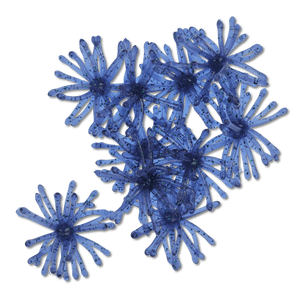
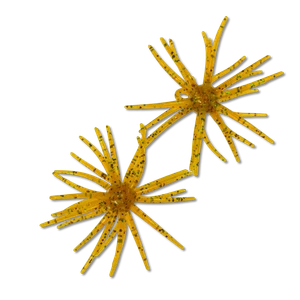
Urchin baits are compact soft-plastic fishing baits built around a center body surrounded by flexible arms, legs, tentacles, or other small appendages. Instead of depending on one large tail for action, the entire bait can quiver, pulse, flare, and breathe with very little movement from the angler.
That unusual profile has made urchin-style soft plastics a growing finesse option for crappie, panfish, bluegill, perch, bass, trout, and other freshwater species. Some anglers also describe similar profiles as fuzzy-dice baits, dice-style baits, tentacle baits, or multi-appendage finesse plastics. Whatever name brought you here, the basic idea is the same: put a lot of subtle movement around a small, easy-to-eat center profile.
What is an urchin bait for fishing?
A fishing urchin is a soft-plastic lure with multiple appendages extending from a compact center body. Those appendages move independently as the bait falls, swims, hovers, shakes, or settles. To a fish, that profile may suggest a tiny crustacean, aquatic insect, small piece of forage, living organism, or simply an easy target worth investigating.
Unlike a traditional curly-tail grub, paddle tail, or minnow bait, an urchin-style soft plastic does not have to move forward to create action. That ability to produce subtle movement while nearly stationary is a big part of why micro urchin baits work so well for crappie and panfish and why larger finesse urchins can be effective for bass.
Field Guide: Urchin Baits
Profile. Species. Rigging. Action. Conditions.▾ Click to open the complete guide
Field Guide: Urchin Baits
Understanding the urchin profile
Why all those arms and appendages matter.
The defining characteristic of an urchin bait is not one exact body shape. It is the combination of a compact center body with numerous soft appendages creating movement around it.
- Multi-directional action: individual arms can move independently instead of following one large tail.
- Movement at rest: current, waves, falling line, or tiny rod shakes can keep the bait alive.
- Compact target: lots of visual movement does not necessarily mean a large meal.
- Variable silhouette: the arms spread, collapse, flare, and change shape as the bait moves.
Don't get hung up on exactly what it imitates. The strength of an urchin-style bait is often impression rather than perfect imitation. It looks small, alive, vulnerable, and different from the hundred standard minnows and grubs a pressured fish may already have seen.
Crappie urchin baits
Micro movement for suspended fish, brush, docks, and pressured schools.
A crappie urchin bait takes the multi-appendage concept and reduces it to a size that crappie can easily inhale. This is where micro urchins really start to make sense.
- Suspended fish: hold the bait at or slightly above the depth of the school.
- Brush piles: hover or pendulum the bait just outside the cover.
- Docks: fish shade lines, openings, and vertical pilings.
- Cold fronts: reduce forward movement and extend the pause.
- Pressured schools: downsize before abandoning productive water.
Our 1.25" Galaxy Grub Urchin Bait is built specifically around this micro presentation, giving crappie anglers a tiny center profile surrounded by soft radiating appendages.
Panfish & bluegill urchins
Small enough for panfish, active enough to get noticed.
A panfish urchin gives bluegill, sunfish, perch, and other small freshwater predators a bite-sized target with more movement than its overall size would suggest.
- Bluegill beds: pitch a micro jig or float rig around edges rather than constantly dragging.
- Weed pockets: let the bait fall naturally into openings and hover above vegetation.
- Dock shade: use a controlled fall and pause once the bait reaches the shade line.
- Perch: fish vertically or on a light jig close to bottom.
- Finicky panfish: use tiny movements and let the appendages work independently.
Because panfish often inspect tiny prey at close range, a micro panfish urchin bait can be particularly useful when a larger grub, tube, or minnow profile gets followed but not eaten.
Bass urchin baits
A finesse answer for smallmouth, largemouth, and pressured bass.
Urchin-style plastics became especially interesting to bass anglers because they offer a profile that looks and behaves very differently from a conventional worm, craw, tube, or minnow.
- Smallmouth: particularly useful around rock, clear water, and smaller forage.
- Largemouth: use as a finesse option when fish are heavily pressured.
- Spotted bass: drop-shot or hover around suspended fish and offshore structure.
- Clear water: let subtle appendage movement replace aggressive lure action.
- Post-front fish: shorten movement and give the fish time to inspect the bait.
Don't assume a bass urchin bait needs to be large. Bass routinely feed on tiny forage, which means a micro urchin can become a legitimate finesse presentation when larger baits are ignored.
Micro urchins vs. larger urchins
Match the profile to the fish, forage, and fishing pressure.
- Micro urchin baits: ideal for crappie, bluegill, panfish, perch, trout, and finesse bass.
- Medium profiles: add visibility and can appeal to larger crappie, perch, smallmouth, and general finesse bass.
- Larger urchin baits: become more bass-oriented and can provide a larger target while retaining the multi-appendage action.
Size rule: If you're seeing fish but not getting bites, try reducing the size of the urchin before abandoning the profile. If tiny fish are constantly stealing the show, step up in size and give bigger fish a more substantial target.
Best ways to rig an urchin bait
Keep the center body secure and the appendages free.
- Small jighead: the simplest all-around setup for crappie, panfish, trout, and micro finesse fishing.
- Drop shot: nose-hook lightly when you want the bait suspended above bottom or cover.
- Float or bobber: excellent for controlling depth around crappie, bluegill, brush, weeds, and docks.
- Vertical presentation: lower the bait directly to suspended fish and work it with micro movements.
- Split shot: separates the weight from the bait for a slower, more independent fall.
- Hover-style presentation: keep the bait near a specific depth while allowing the appendages to quiver.
Whatever rig you choose, avoid burying or trapping unnecessary appendages. One of the biggest advantages of an urchin soft plastic is the amount of movement created by those individual arms.
How to fish an urchin
Shake less. Pause longer. Let the bait work.
- Hover: hold the bait almost stationary and lightly shake slack line.
- Swim-pause: move it slowly through the water column, then stop and let the appendages settle.
- Micro-shake: barely move the rod tip — enough to make the arms breathe without moving the bait several feet.
- Deadstick: sometimes doing nothing is the presentation.
- Controlled fall: let the bait descend naturally rather than snapping it downward.
Common mistake: Overworking the bait. An urchin already has many moving parts. If fish are following without eating, try less rod movement before you try more.
Where urchin baits shine
Cover, suspended fish, clear water, and finesse situations.
- Brush piles: keep the bait just above or alongside the cover.
- Docks: work shade, pilings, corners, and openings.
- Weed edges: swim parallel or pause inside pockets.
- Rock: strong smallmouth and perch territory for a subtle finesse profile.
- Suspended schools: use precise depth control rather than fishing below the fish.
- Clear water: rely on realistic movement and restrained color.
- Heavily pressured water: show fish a shape and movement pattern that is different from standard plastics.
Choosing urchin bait colors
Start natural, then add visibility or contrast.
- Clear water: translucent tones, smoke, blue, green, natural bug colors, and subtle flake.
- Stained water: stronger silhouettes, brighter accents, or contrasting color combinations.
- Low light: add visibility with brighter color, glow, or noticeable flake when available.
- Pressured fish: start subtle and let the unusual profile create the attraction.
- Two-color combinations: pair a natural shade with a contrasting or more visible secondary color.
Because an urchin bait already creates a visually busy silhouette, color does not always need to be extreme. Often the better starting point is enough contrast for the fish to find the bait while allowing the profile and appendage movement to do the rest.
Urchin baits vs. grubs & minnows
Different action for different moods.
A traditional grub, paddle tail, or minnow soft plastic usually creates its strongest action while moving forward. An urchin is different because movement happens around the center body even when the bait barely travels.
- Grub: usually relies heavily on tail movement.
- Paddle tail: provides strong swimming action and vibration.
- Minnow plastic: presents a recognizable baitfish silhouette.
- Urchin bait: emphasizes multiple small movements around a compact center.
None is automatically better. The advantage of carrying an urchin is having a profile that behaves differently when fish stop responding to the more familiar options.
Fuzzy dice, dice baits & urchins
Different names, overlapping finesse ideas.
You may hear anglers use terms such as fuzzy dice bait, dice bait, dice-style soft plastic, tentacle bait, or urchin bait when talking about this general family of unusual multi-appendage finesse plastics.
Those terms do not always describe exactly the same shape. Some designs have a cube-like center, others are round, oval, grub-like, or irregular. What they generally share is a compact body surrounded by many small appendages that create subtle movement.
The Jiggin' Johnson's Galaxy Grub keeps its original grub-inspired center profile, which is why we use the name Galaxy Grub Urchin Bait rather than pretending every multi-appendage plastic is exactly the same lure.
Urchin bait FAQ
Quick answers to the questions anglers ask most.
- What is an urchin bait?
A compact soft plastic surrounded by multiple flexible appendages that move around the entire bait. - Are urchin baits good for crappie?
Yes. Micro urchin baits are particularly well suited to crappie because they provide lots of movement in a very small package. - Can bluegill eat an urchin bait?
Absolutely. Small urchins can be excellent bluegill and panfish baits when rigged proportionally on light tackle. - Do urchin baits catch bass?
Yes. Bass urchins can be effective for largemouth, smallmouth, and spotted bass, especially in clear or heavily pressured water. - What does an urchin bait imitate?
It can suggest insects, crustaceans, fry, tiny forage, or simply a small living object. It does not need to perfectly imitate one specific food source. - How do you rig an urchin bait?
Jigheads, drop shots, floats, split-shot rigs, vertical rigs, and hover-style finesse presentations can all work depending on bait size and target species. - Should I jig an urchin aggressively?
Usually not as a starting point. Small shakes, pauses, slow swims, and controlled falls allow the appendages to create their own action. - Are micro urchins only for panfish?
No. Bass and trout routinely eat tiny forage, making micro urchins legitimate finesse baits for larger fish as well.